

Sharpened by Rejection
From adolescent embarrassment to venture capital: how rejection strengthens us

Dear Fabulous Female Founders,
I’ve shared with y’all that I’ve deepened my involvement with Rogue Women’s Fund, which invests in early-stage, women-led tech startups across the US. It’s been a joy to meet founders building bold companies—and a sobering reminder that venture capital runs on rejection, for most founders hear no over and over again.
This has gotten me thinking about my own history with rejection, starting with that gladiator arena of adolescence known as middle school, when I tried out for the cheerleading squad. Of course I got rejected. I was a frumpy, unathletic Jewish girl in Richardson, TX, where Barbie defined beauty and Friday night football was treated with roughly the same reverence as church. I came home devastated and refused to leave my room, swallowing the humiliation whole.
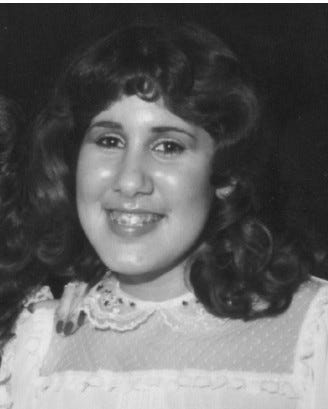
The more puzzling question is why I tried out in the first place. I had brains, not big boobs; smarts, not school spirit. But middle school logic is powerful: the popular girls ruled the ecosystem, and I was attempting a brief, ill-advised migration.
I didn’t know it then, but rejection had begun its quiet work. I joined a welcoming non-school youth group (B’nai Brith), reconnected with a beloved elementary school friend, and felt relieved to have been spared the obligation to wear short pleated skirts and big hairbows and spend every afternoon learning silly chants and routines.
📣🚫📣
The next rejection that burned came from the University of Texas honors program.
My grades were strong and I loved learning. My friend Carol got in. I did not.
The rejection felt septic, like an infected wound that wouldn’t close. But somewhere in that inflammation, a little fighter woke up: Oh really? You don’t think I’m worthy enough for your stupid honors program?
Thanks to AP credits and an almost spite-fueled schedule of summer school and overload semesters, I finished in three years and headed straight to Johns Hopkins School of Advanced International Studies at age 20.
🤘🚫🤘
In D.C., I fell hard for a man who seduced me with homemade chocolate chip cookies and long bike rides. One evening, while cuddled together in a hammock, he said softly, “This isn’t going to work.”
No “it’s not you, it’s me.” No apologies, excuses, or hiding.
Just refreshing bluntness, and somehow, I understood, deep down, that he was right.
❤️🩹❤️🩹❤️🩹
During my two decades of consulting, rejection was day-in, day-out reality. In general, a win rate below 20% is considered normal. At Alta Planning + Design, we typically won 50–60% of our bids because of the specialized nature of our work, but that still meant losing a lot.
While all of the above rejections came without explanation, forcing me to simply move on, every lost consulting bid led to a post-mortem analysis. Did we misunderstand the client? Miss a political nuance? Underprice? Overcomplicate? Did the competitor have a deeper relationship?
Once, I thought I had the inside track, connections, team, and scope of work to secure a project in a large Pacific NW city. After the interview, a person in the know texted me to go ahead celebrate, for we were ahead on all the score sheets. But you know where this is heading…we lost. The project manager told me that the scoring resulted in a “statistical tie,” which he broke in favor of our competitor, who he just so happened to be working for on the side, and who he went to work for full-time not long after.
Colleagues wanted me to file a formal conflict-of-interest protest, but I demurred, taking the high road instead. (Protests rarely succeed and only serve to piss of your hopefully future client on whose good side you want to stay.)
Still, I was furious; how dare they reject me in such an underhanded way? Fine, you assholes, I’ll show you! Before my competitor had even finished negotiating the contract, I’d reeled in hundreds of thousands in new work. Also, we went ahead and opened an office in that city, and around two years later, got hired to redo the crappy work of the competitor.
I could tell you dozens of stories like this. I learned—I had to learn—to metabolize rejection without collapsing, using the Buddhist approach of high intention, low attachment.
🚴♀️🚴♀️🚴♀️
My son Skyler’s first real rejection came when he was cut from his high school basketball team, a disappointment he carried like a storm cloud for months. The following year, my husband suggested he try a recreational league. Skyler ran with the idea, starting his own team, the Freeballers, with friends who had also been cut or who simply preferred playing to sitting on a bench. He collected the money, organized the schedule, ordered jerseys, coached, and played his heart out. The team had so much fun that others joined—some even abandoning the high school team—so many they formed a second team and played together throughout college.
In other words, he turned rejection into his first start-up.
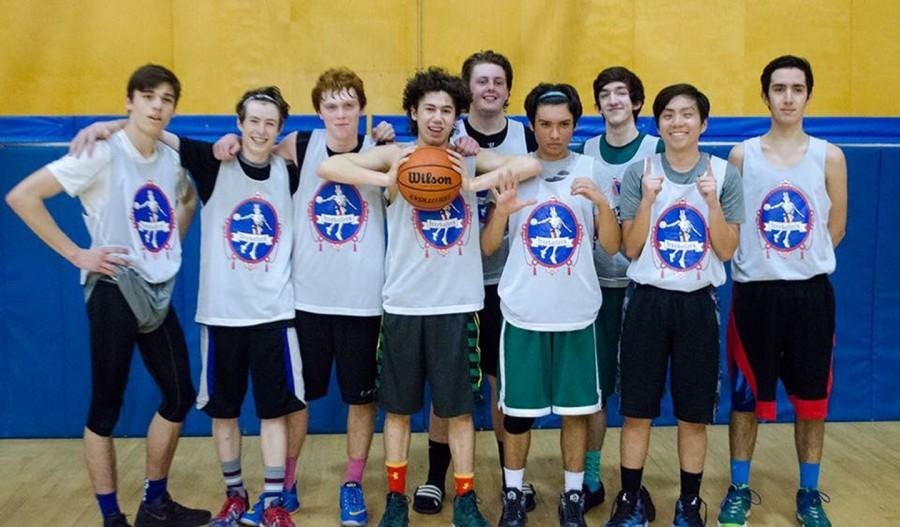
Today, he sells software services and gets rejected twenty times a day. He shrugs, adjusts, makes the next call. Rejection isn’t identity; it’s iteration. The no’s are part of the math. The yeses feel sweeter because of them.
🏀🏀🏀
As an investor and fund advisor, I now sit on the other side of rejection. We say no because of thesis alignment, timing, portfolio construction, stage mismatch, check size, valuation expectations, market saturation, unclear path to scale, regulatory risk, because we’ve already backed something too similar, leadership concerns, or because it just doesn’t feel right.
In venture, one yes for every fifty or even every hundred conversations is common. If you take each no as a referendum on your worth, you won’t survive long enough to find your yes.
📣 🤘 ❤️🩹 🚴♀️🏀 🦈
I’m grateful I didn’t make the cheer squad. Grateful I didn’t get into the honors program. Grateful John broke up with me. Grateful for the bids we lost. Each rejection carved away a softer version of me.
If you’re building something ambitious, rejection isn’t a glitch in the system. It is the system. Let it train you. Let it refine you. Let it toughen your skin without hardening your heart.
The yes you’re chasing is being shaped by every no you survive.
~ Mia
Hi Mia! Love love love your writings always. This one prompted me to contribute the notion of "strengthening the founders' perspective" (in regard to rejection or creating further) to include thinking about the perspective of their stakeholder (or whatever or whomever they find themselves up against) to help conclude in the end what in their own action may work or not. Sometimes we forget to include that "other" perspective in relation to our purpose and goals. We may not be able to fully succeed if we don't consider how THEIR perspective relates to what we ultimately want to accomplish with them. For "Founders", isn't it also about "servicing our stakeholders"? Thanks again for pouring your heart out to help others!!
There’s so much here, mostly I want to give you a hug. So glad you found your inner fighter! 🥊 🌟